
DIY Sliding Door Repair: When to Call
Speedy makes a living fixing what people couldn't fix themselves. We don't say that to put you down — we say it because most of the doors we fix were 80% of the way to working when the homeowner gave up. Here's the honest breakdown of what you can DIY and what almost always goes sideways.
The 3 jobs you can absolutely DIY
1. Cleaning the track
This is the cheapest "repair" possible and fixes maybe 15% of grinding doors. You need: a vacuum with a crevice tool, a stiff brush, a damp microfiber cloth, and 10 minutes.
Vacuum the bottom track thoroughly. Use the brush to dislodge anything packed in. Wipe with the damp cloth. Slide the door — if the noise is gone, you saved a service call. If not, the rollers are the problem.
2. Lubricating the rollers and track
Use silicone-based lubricant (NEVER WD-40 — it attracts dust and gums up the bearings). Apply to the bottom track and where the door meets the frame. Slide the door 10-20 times to work it in. This buys time on tired-but-still-functional rollers.
3. Tightening loose handle screws
If the handle is loose but the latch still works, the mounting screws have backed out. Open the door, find the screws on the inside of the handle, and snug them with a Phillips screwdriver. Don't over-tighten — you'll strip the holes.
The 4 jobs that almost always go sideways
1. Roller replacement
The internet makes this look easy. It is not. You have to:
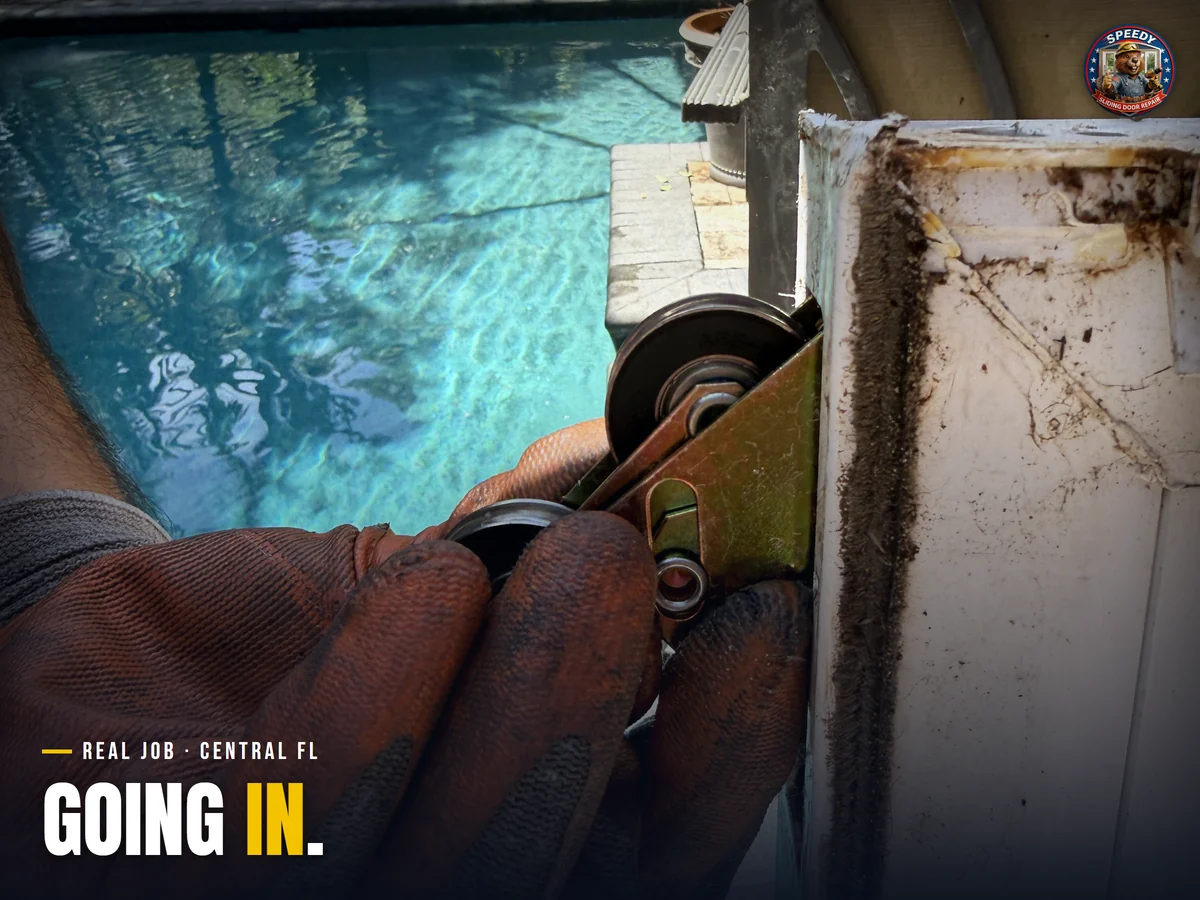
- Lift a 100+ lb door off the track without dropping it (almost always takes 2 people)
- Remove the height-adjustment screws without stripping them (they're often corroded shut)
- Pry the old roller out without damaging the housing
- Match the new roller to the original (4 dimensions need to match within 1/16")
- Re-seat the door without skewing the alignment
The classic DIY failure: the homeowner pries the door off, can't get it back on, and now has to call us with the door propped against a wall. A quick roller fix has now become an emergency call.
2. Track repair or replacement
The track is structural. It's screwed and often glued into the frame. Removing it without damaging the frame requires a heat gun, a putty knife, patience, and the knowledge of which screws are decorative. Replacing it requires the exact OEM-spec part. Capping is sometimes possible DIY but rarely worth the risk.
3. Lock cylinder replacement
Slider locks have proprietary mechanisms that vary by brand. The latch arm is spring-loaded and small parts go flying when removed wrong. Buying a "universal" replacement at Home Depot almost never fits. Better to call us — the estimate is free.
4. Anything that requires lifting the door panel out
If a YouTube tutorial says "first, remove the door from the frame" — stop. That's the moment most DIY projects become professional rescue jobs. The panel is heavy, the glass cracks easily, and re-seating requires a perfect height match.
What every DIY-er should keep on hand
- Silicone spray lubricant (NOT WD-40)
- A vacuum with a crevice tool
- A Phillips screwdriver and a small hex key set
- A damp microfiber cloth
- The phone number of a local sliding-door repair shop, in case the DIY job goes south
The honest math
If you're handy and have a partner to help lift the door, you can probably DIY a roller swap for $40 in parts and 2 hours of work. If you're not 100% confident, a Speedy roller job comes with stainless OEM-spec parts, professional installation, a 1-year warranty on parts, and zero risk of damaging the door. Most homeowners do it once, then call us.
Frequently asked
Which sliding door repairs are safe to DIY?
Cleaning grit out of the track, light silicone lubrication, and snugging loose handle screws are safe do-it-yourself jobs. Anything that means lifting the panel off the track — roller, track, or lock work — is where DIY usually goes sideways.
Can I replace sliding door rollers myself?
Technically yes, but it means lifting a 100-plus-pound glass panel, matching the roller to spec within about a sixteenth of an inch, and re-seating it without skewing the alignment. Most people can’t get the door back on. Speedy does it with a 1-year warranty on parts.
Should I use WD-40 on a sliding door?
No. WD-40 attracts dust and gums up the roller bearings. Use a silicone-based lubricant on the bottom track and where the door meets the frame instead.
What happens if a DIY sliding door repair goes wrong?
The usual failure is a heavy panel that’s off the track and won’t go back on, or cracked glass. A dropped door turns a small roller job into a far bigger bill, which is why a free professional diagnosis is worth the call before you pry anything off.
When should I stop and call a pro?
The moment a tutorial says to remove the door from the frame, or the door won’t slide back on. In Central Florida, Speedy offers a free diagnosis and same-day mobile service at (321) 204-2545, and the estimate is free.
Get My Free Estimate →📞 (321) 204-2545