
Why Is My Sliding Door Grinding?
Short answer: 9 out of 10 grinding sliders are worn rollers. The other 10% is a damaged track, debris in the channel, a misaligned door, a stuck lock, or — rarely — frame distortion. This guide walks through all six in the order we encounter them in homes across Central Florida, with the sound that tells them apart.
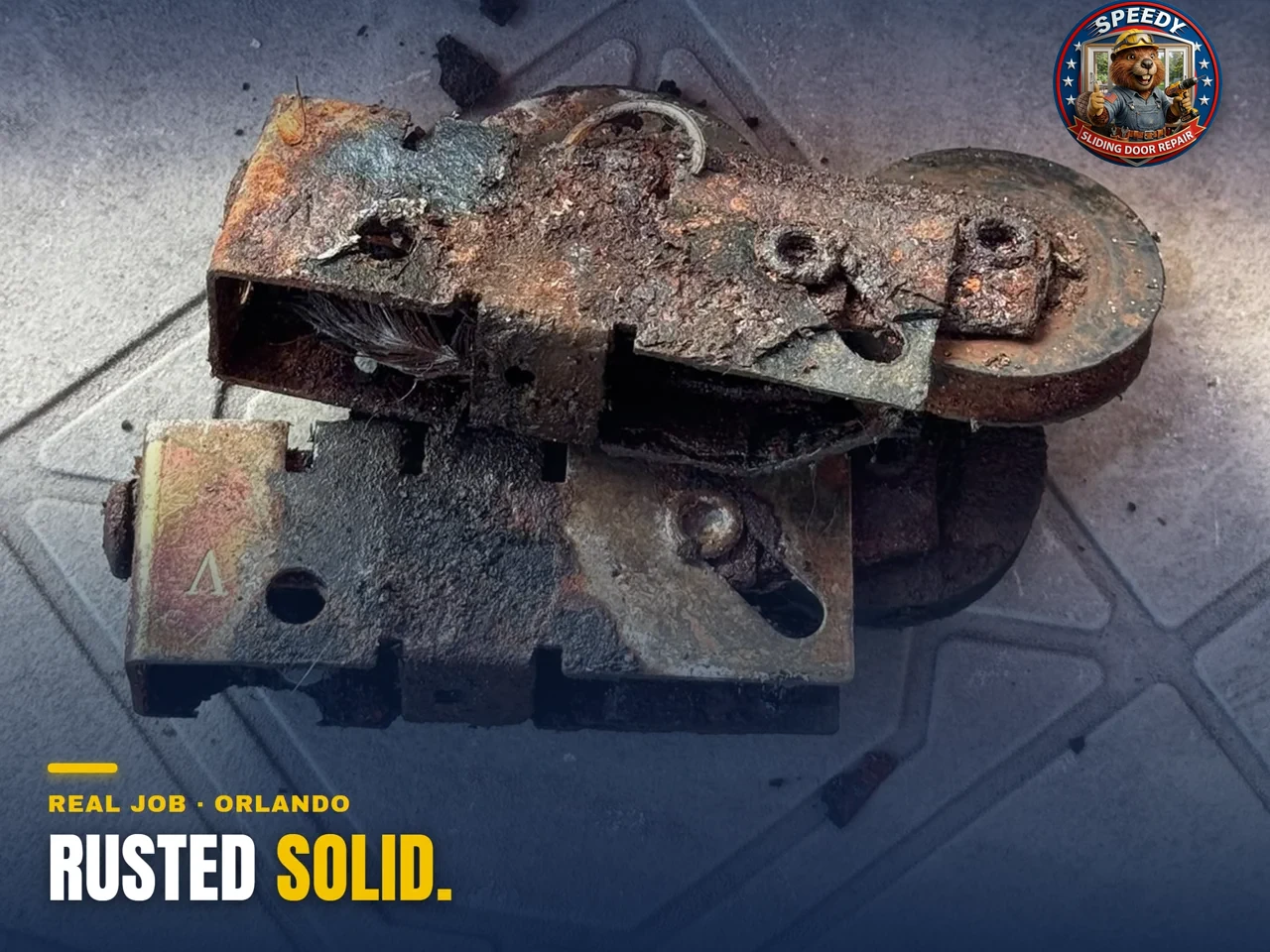
1. Worn rollers (the cause 90% of the time)
Sound: deep grinding, metal-on-metal, sometimes with a squeal at the start of the slide.
Sliding-door rollers are small wheels with sealed bearings hidden inside the bottom rail of the door. They wear out — usually 8-12 years in Florida humidity, faster on the salt-air coast. Once they fail, the door rides directly on the metal track, gouging it with every slide.
Fix: replace as a matched pair. 30-60 minutes. Most fall under our Glide Restore package.
2. Damaged or pitted track
Sound: intermittent grinding that gets louder over a specific section of the slide. The door may "stick" at one spot.
Once the rollers are worn (#1), they cut into the aluminum track. Months later, you have a wavy, gouged track that no roller can run smoothly on. New rollers without fixing the track will fail again in 6-12 months.
Fix: cap with marine-grade stainless (priced at your free estimate) or full replacement (Free on-site inspection).
3. Debris in the track
Sound: sudden grinding or crunching that wasn't there last week.
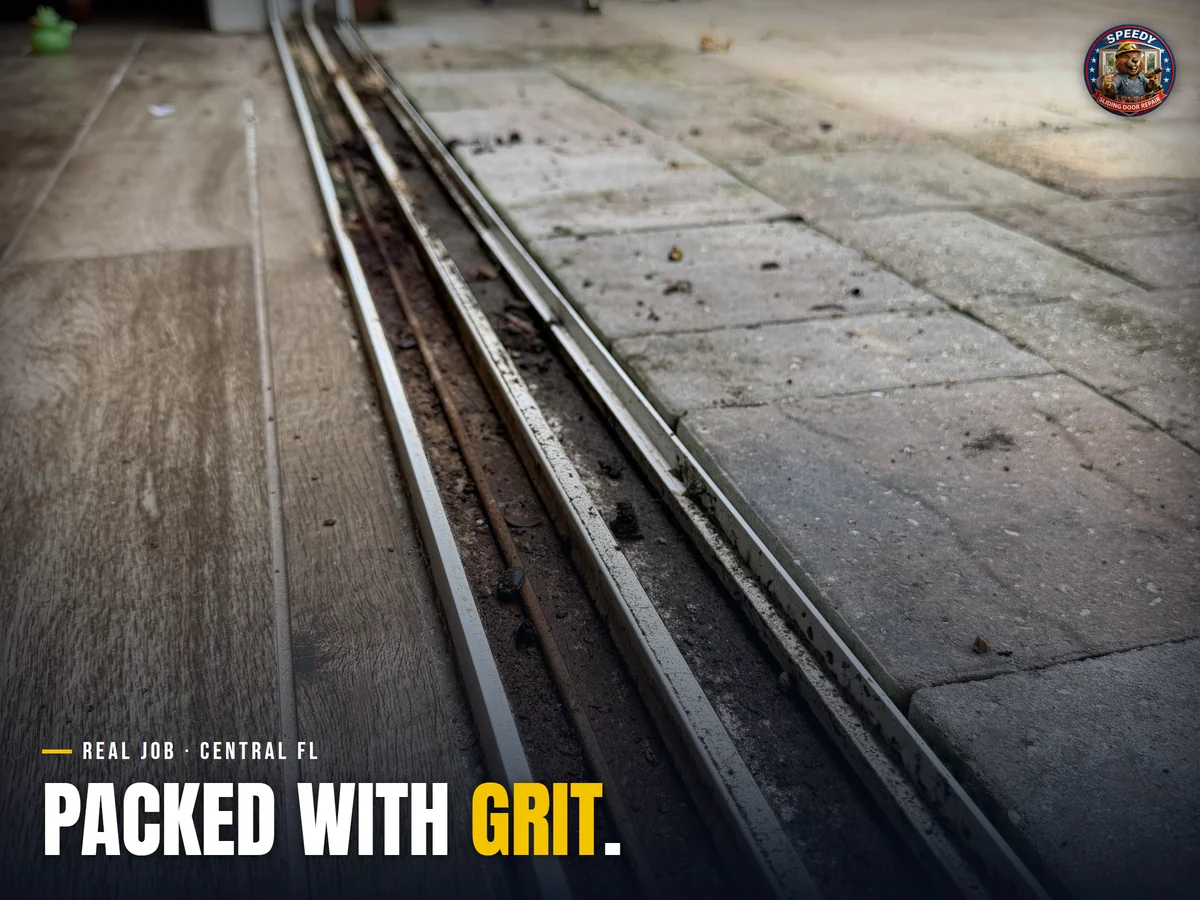
Florida lawns shed grit constantly. Live Oak debris, sand, palm-frond bits, dog hair, pet litter — all of it ends up in the bottom track. A tiny rock under a roller sounds catastrophic.
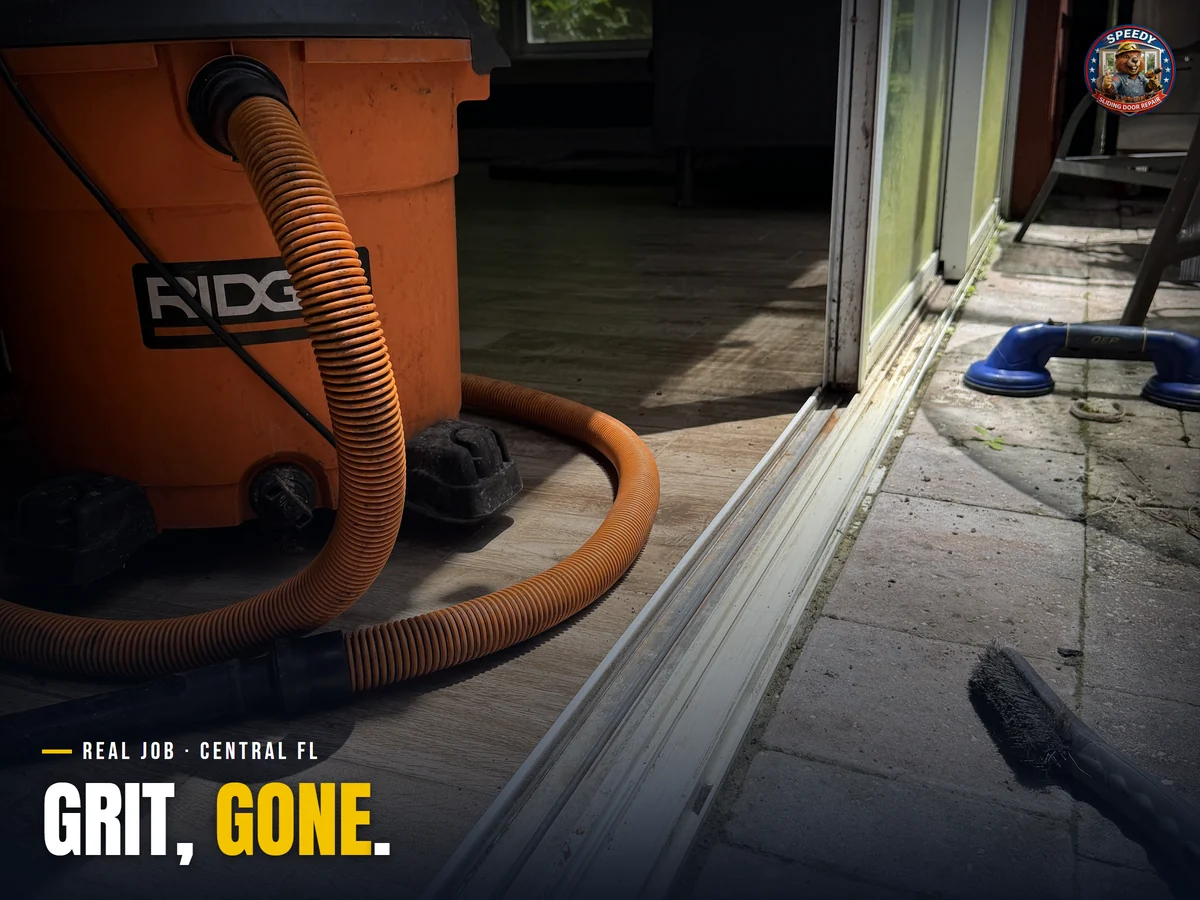
Fix: vacuum the track thoroughly with a crevice attachment, then run a damp cloth through the channel. If grinding stops, you saved a service call.
4. Misaligned door
Sound: grinding only at one end of the slide; door drags more on closing than opening.
Sliding doors have height adjustment screws on the bottom of each panel. Over time, vibration loosens them. The door drops at one end, riding heavier on one roller than the other.
Fix: tighten the height-adjustment screws and re-square the door. Often combined with a roller replacement.
5. Sticky lock catching the strike plate
Sound: a "scrape" right at the moment the door reaches the closed position.
This is not actually the door rolling — it's the latch hooking the strike plate before the door is fully closed. Sounds like grinding, isn't.
Fix: re-align or replace the latch. Priced at your free estimate.
6. Frame distortion (rare, serious)
Sound: grinding everywhere, door no longer slides at all, visible gap between door and frame at top or bottom.
Florida foundation settling can warp the door frame slightly. The track is no longer level, and no amount of roller or track work fixes the underlying geometry.
Fix: this is the rare case where the door may need replacement, or the frame needs structural repair. We will tell you straight if this is what we find.
How to stop a grinding sliding door
Once you’ve matched the sound to a cause above, here’s the actual sequence we run on a service call — in order, so you’re not replacing parts you don’t need yet.
- Identify the sound. Slide the door slowly and listen. Deep metal-on-metal grinding points to rollers; a scrape only at the last inch points to the lock; a sudden crunch points to debris.
- Pull the panel. With a helper, lift the door up and out of the bottom track so you can see the rollers and the channel clearly. (Skip this step for the lock or frame causes.)
- Vacuum & scrub the track. Shop-vac the full length of the channel, then run a damp cloth through the groove to lift packed grit a vacuum alone won’t grab.
- Replace worn rollers. If the wheels are flat-spotted, seized, or won’t spin, swap them as a matched pair — a partial fix just wears the new one unevenly.
- One-finger glide test. Set the door back in the track and slide it the full width with one finger. Smooth and silent means you’re done; any grind means go back a step.
What to do right now
- Vacuum the bottom track thoroughly. If the noise stops, you fixed it for free.
- Lift the door an inch. Noise stops? Rollers. Noise continues? Track or alignment.
- If the door takes both hands to slide and grinds, do not "muscle through it" — every slide makes the track damage worse.
- If you hear grinding only at the moment the door closes, look at the lock first.
- If none of the above match what you're seeing, call us. Diagnosis on the phone is free.
Frequently asked
Why is my sliding glass door grinding?
About 9 out of 10 grinding doors are worn rollers. The rest are a damaged or pitted track, debris in the channel, a misaligned panel, a sticky lock catching the strike plate, or — rarely — a distorted frame.
How do I tell if it is the rollers or the track?
Lift the door an inch by the bottom rail while sliding. If the grinding stops when you lift, the rollers are the cause; if it continues, it’s the track or the alignment.
Can I fix a grinding sliding door myself?
Sometimes. Vacuuming grit out of the bottom track fixes debris-related grinding for free. But steady metal-on-metal grinding means the rollers are worn and need replacing.
Is it bad to keep using a grinding sliding door?
Yes. Worn rollers ride directly on the aluminum track and gouge it with every slide, turning a roller job into a track repair. Stop muscling it and get it looked at.
How much does it cost to fix a grinding sliding door?
Rollers, track and lock realignment are priced at your free estimate. If more than one is involved, a full restoration is priced after a free on-site inspection.
Get My Free Estimate →📞 (321) 204-2545