
Sliding Glass Door Won’t Lock?
A sliding glass door that won’t lock isn’t just annoying — it’s the single easiest way a Central Florida home gets entered. Burglars know a slider with a dead latch slides right open. So before you wedge a chair against it and hope, here are the five real reasons the latch won’t catch, which ones you can fix tonight, and which need a pro.
First, understand how the lock works
Almost every sliding glass (patio) door uses the same simple setup: a mortise lock buried in the edge of the moving panel, and a keeper (also called the strike plate) screwed into the fixed jamb. Flip the lever and a small hook swings out of the door and grabs the slot in the keeper. That’s it. If the hook and the slot don’t line up — or the hook is worn, jammed, or never reaches — you get nothing. Every cause below is just a different way that handshake fails.
Cause 1: The door has sagged from worn rollers (most common)
This is the one people never guess. The rollers at the bottom of the door wear flat after 8–12 years in Florida’s grit and humidity, and the whole panel drops a few millimeters. That’s all it takes — the latch hook now sits below the keeper slot and sails right past it. The lock isn’t broken at all; the door is simply hanging too low.
How to spot it: close the door and look through the gap at the lock. If the hook lines up under the hole instead of with it, you’ve found it. You may also notice the door dragging, grinding, or needing a shove to close — all signs the rollers are gone. The honest fix here is not a new lock. It’s roller replacement, from $89, which lifts the door back to square so the existing latch lines up again.
Cause 2: The latch or mortise lock is worn out
Sometimes the hook itself is the problem. The internal spring tires, the pot-metal hook cracks, or the cylinder grinds and won’t throw. You flip the lever and feel nothing crisp — it’s loose, sticky, or just spins.
How to spot it: open the door and work the lever in the air. A healthy latch snaps the hook out and springs it back. If it’s mushy or the hook doesn’t fully extend, the mechanism is shot. A worn mortise lock is a swap-out, not a repair-in-place — that’s squarely Lock System Repair & Upgrade, done in one visit.
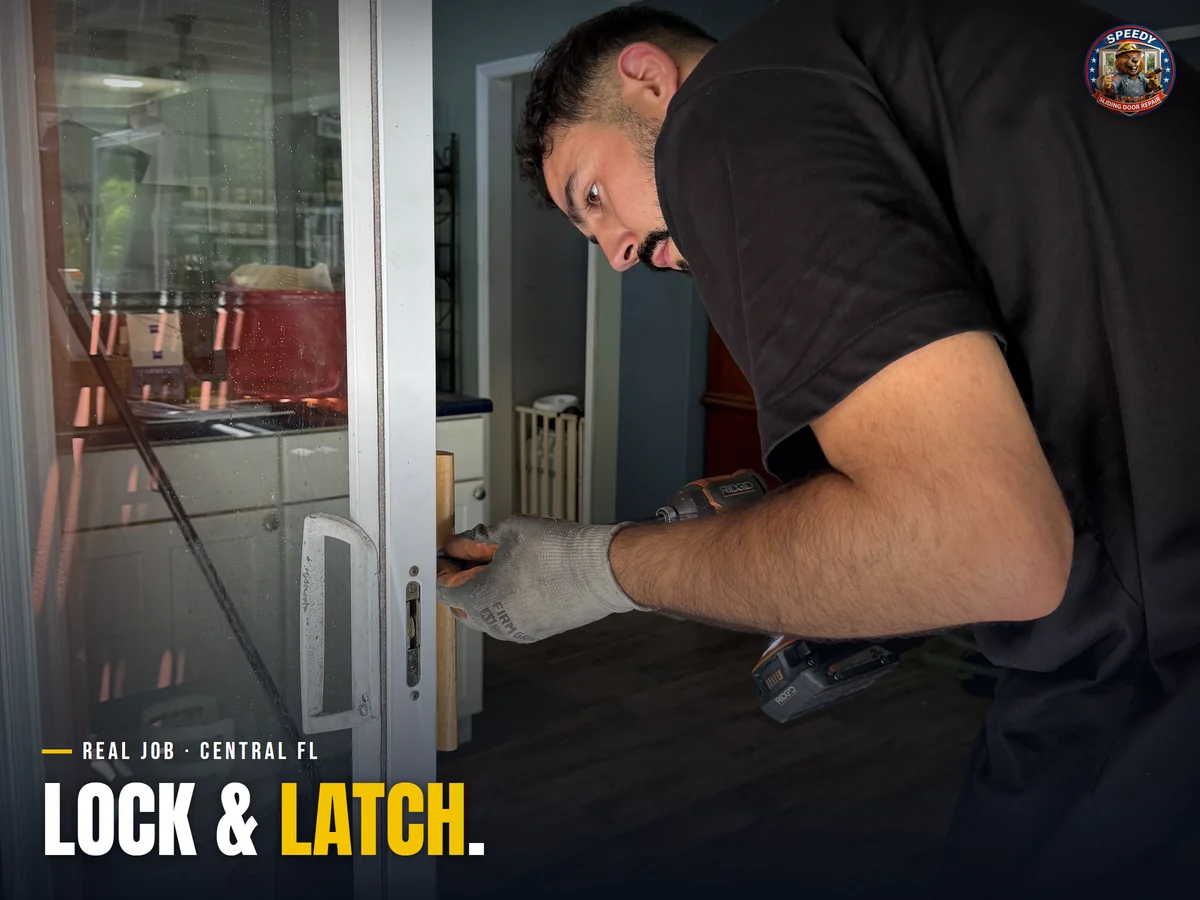
Cause 3: The keeper / strike plate is bent or misaligned
The keeper is held on by two screws, and screws loosen — especially after a season of slamming and the house shifting in the heat. The plate creeps out of position, or a forced lock attempt bends it, and the hook can no longer find the slot.
This one you can often fix yourself. Loosen the two keeper screws a quarter turn, close the door, throw the lock so the hook seats where it wants to, then nudge the keeper to meet it and retighten. If the plate is visibly bent, it needs replacing. Don’t force a half-engaged lock — that’s how you snap the hook and turn a $0 adjustment into a part order.
Cause 4: Debris or paint is jamming the latch
Florida throws sand, salt, pollen, and lovebug residue into everything, and it all collects in the latch pocket and the keeper hole. Add a past repaint where someone got lazy with the tape, and the hook physically can’t swing or the slot is half-filled.
Fix it yourself: vacuum the latch pocket and keeper, brush out the grit, scrape any paint out of the slot with a flathead, then hit the mechanism with silicone spray — never WD-40 (WD-40 dries gummy and grabs more dirt). Work the lever a dozen times. If the hook now swings free and catches, you just saved a service call.
Cause 5: The door isn’t closing all the way
The latch can only grab the keeper if the door actually reaches it. If your panel stops an inch or two short of the jamb — from a dirty track, a flat-spotted roller, or a bent track — the hook never gets close enough to engage. People blame the lock when the real culprit is upstream.
How to spot it: watch the gap as you close the door. If it stops short of fully shut every time, that’s your answer. Fix the closing problem first and the lock often takes care of itself. We wrote the full diagnostic here: why your sliding door won’t close all the way.
Quick reference: which cause, and who fixes it
| Symptom you see | Likely cause | DIY or pro? |
|---|---|---|
| Hook sits below the keeper hole | Worn rollers, door sagged | Pro — roller replacement from $89 |
| Lever feels loose, hook won’t throw | Worn mortise lock | Pro — lock repair, single visit |
| Hook misses the slot side-to-side | Keeper loose or bent | DIY adjust; pro if bent |
| Hook won’t swing / slot blocked | Debris or paint | DIY clean & lube |
| Door stops short of the jamb | Door not closing fully | Fix the close first |
The security part nobody likes to say out loud
An unlocked slider is the number-one entry point for break-ins in Florida homes — ground-floor, glass, and around the back where no neighbor sees. A latch that “mostly” catches is the same as no lock. If yours won’t fully engage, treat it as urgent, not as a someday project. While you wait on a fix, a bar in the track plus a secondary foot lock makes the door far harder to defeat.
Want to button it up properly? Read how to secure a sliding glass door, and if you’ve got little ones, childproof sliding door locks for Florida homes covers the safe-and-secure setup.
What you can try in 15 minutes
- Close the door and check whether the hook lines up with the keeper hole (high vs. low tells you sag)
- Vacuum and brush the latch pocket and the keeper slot, then scrape out any paint
- Spray the mechanism with silicone, never WD-40, and work the lever a dozen times
- If the hook misses sideways, loosen the keeper screws, re-seat to the hook, and retighten
- If the door stops short of closing, clear the track before you blame the lock
If the hook still won’t catch after cleaning and a keeper tweak, the door has almost certainly sagged or the latch is worn — and that’s parts-and-tools territory. Speedy will diagnose it free, tell you straight whether it’s a $89 roller fix or the lock itself, and handle it in one visit. Everything we replace is backed by a 1-year warranty on parts.
Frequently asked
Why won’t my sliding glass door lock anymore?
The most common reason is worn rollers. As they wear, the door sags and drops the latch below the keeper hole, so the hook can no longer reach it. The other causes are a worn latch mechanism, a bent keeper plate, debris or paint in the latch, or a door that isn’t closing fully.
Is it safe to leave a sliding door that won’t lock?
No. An unlockable slider is the single easiest way a Central Florida home gets entered. Until it’s fixed, drop a cut broom handle or security bar in the track and consider a temporary foot lock so the door can’t be slid open.
Can I fix a sliding glass door lock myself?
Sometimes. If the keeper plate is just out of alignment you can loosen its screws and shift it, and you can clean debris or paint out of the latch. If the door has sagged from worn rollers or the latch mechanism is broken, you need parts and tools most homeowners don’t have.
How much does sliding door lock repair cost?
Lock System Repair & Upgrade is a single-visit repair and we give a free diagnosis first, because the real fix is often worn rollers (from $89) rather than the lock itself. Full restoration, which realigns the door and lock together, is priced after a free on-site inspection.
Get My Free Estimate →📞 (321) 204-2545