
Why Is My Sliding Glass Door Leaking When It Rains?
Quick answer: most sliding glass doors that leak in the rain have water that can’t drain out of the bottom track. Clogged weep holes, a screen track blocking them, worn seals, a worn sill or a panel that has dropped on worn rollers all let rain back up and over the sill. Start with the weep holes.
Water on the floor again? Speedy comes to you across Orlando, Kissimmee and Central Florida, usually the same day. We find why the track isn’t draining, fix the door, and give you a free estimate first. Every repair carries a 1-year warranty on parts.
How a sliding door is supposed to handle rain
A sliding door isn’t built to be watertight at the bottom. Rain that blows against the glass runs down into the bottom track, and the track is designed to drain it back outside through small slots called weep holes. As long as that drainage works, the water never reaches your floor. When it stops working, the track fills like a gutter and spills over the inside lip of the sill. That’s why most leaks show up only in a hard Florida downpour, not in a light rain.
This is a different problem from a drafty door that leaks air and runs up the AC bill. Here we’re talking about water.
The 5 causes of a sliding door leaking in the rain
1. Clogged weep holes (the most common)
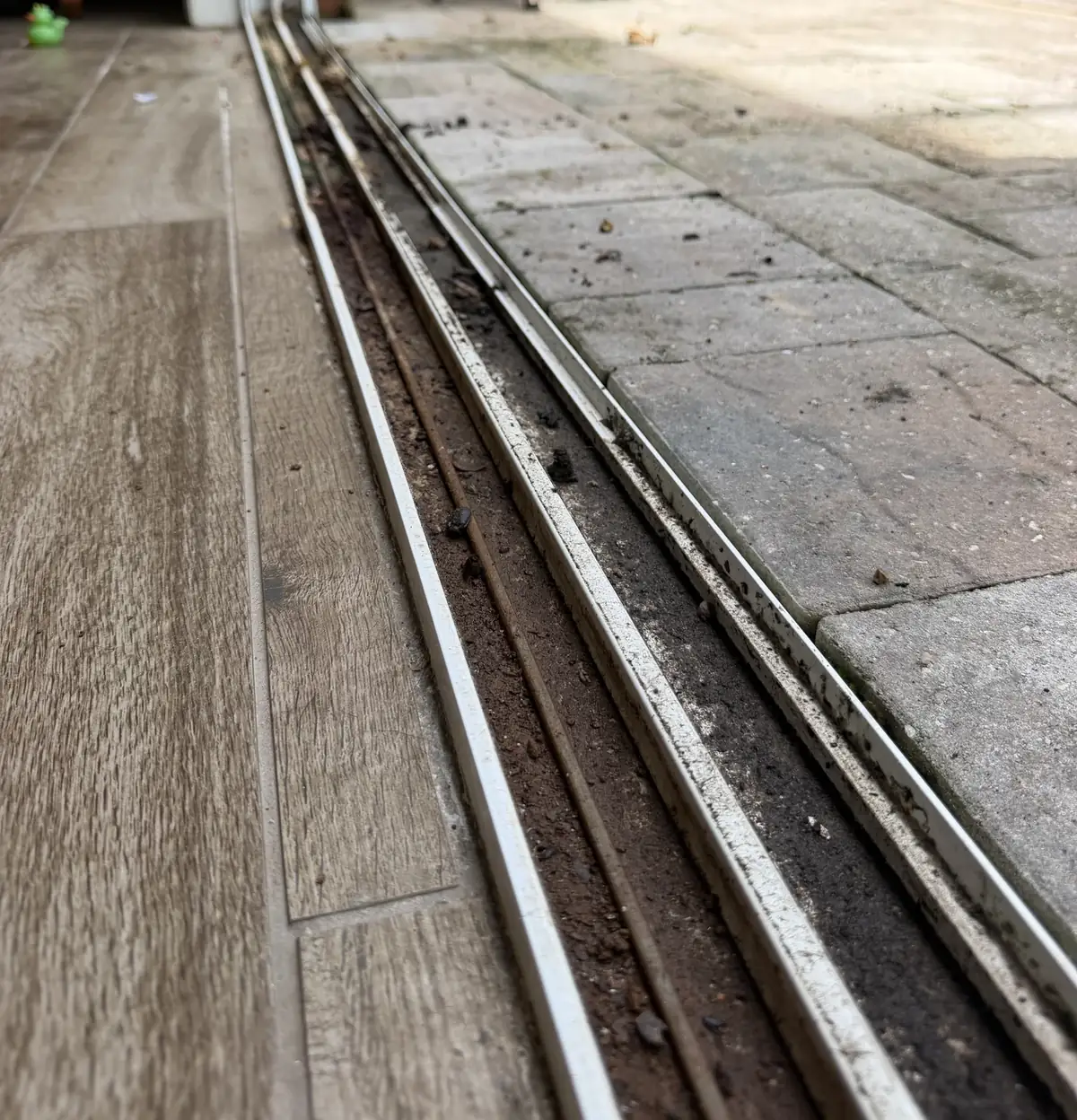
Sand, leaves, pollen and pet hair wash toward the weep holes and pack them shut. The little plastic flaps outside can also get stuck closed with dirt or paint.
DIY check: pour a cup of water into the bottom track. It should drain out the slots outside within a minute. When it’s a pro job: the holes are clear but the water still sits, or the flaps are broken off.
2. A screen track blocking the drainage
On many Florida sliders the screen door runs in its own channel on the outside of the track. Debris trapped there, or a bent screen track, can dam the water before it reaches the weep holes.
DIY check: slide the screen to one side and clean that outer channel too. When it’s a pro job: the screen track is bent or the screen won’t sit in it properly.
3. Worn seals or pile weatherstrip
The fuzzy pile and rubber seals along the edges of the panel keep wind-driven rain from blowing past the door. After years of Florida sun they flatten and shrink, and in a sideways storm water gets pushed through the gap.
DIY check: with the door closed, look for daylight along the edges and feel for flattened, bare spots in the pile. When it’s a pro job: the leak is at the side or where the two panels meet, not at the bottom — or the door no longer closes square, which points back to the rollers.
4. A worn or damaged sill and track
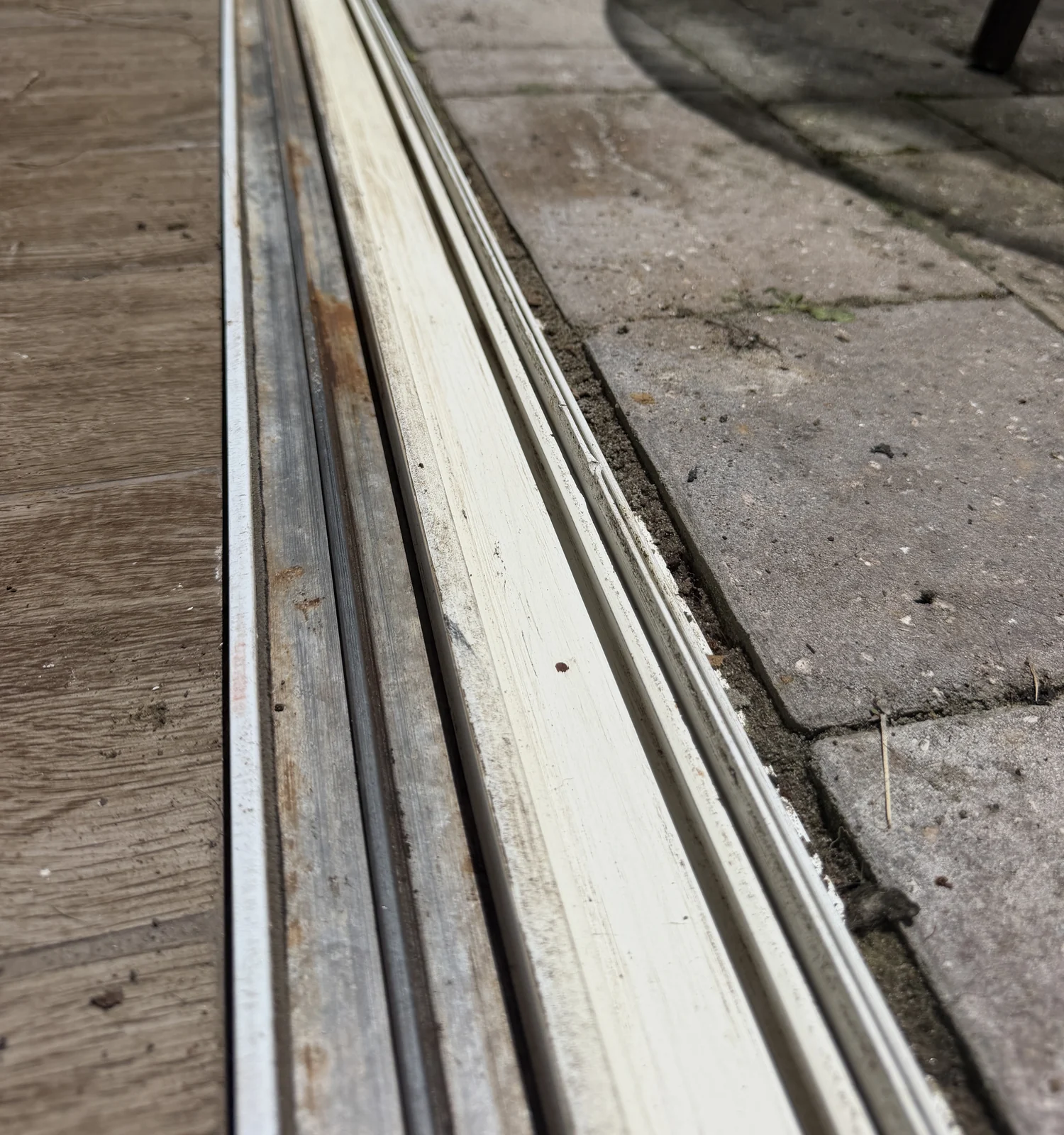
A track that’s cracked, corroded near the coast, or worn down where the rollers ride can’t hold and guide the water the way it was built to. Water finds the low spot and comes in there.
DIY check: look for cracks, pitting or a low, worn groove in the track. When it’s a pro job: almost always — a worn track gets repaired or capped in stainless. See track repair.
5. The panel has dropped on worn rollers
When the rollers under the door wear down, the whole panel sits lower in the frame. It stops sealing evenly against the top and sides, and the gap it leaves lets rain blow in. You’ll often notice the door is also harder to slide or scrapes the bottom.
DIY check: look at the gap along the top of the door — if it’s wider at one end, the panel has dropped. When it’s a pro job: worn rollers need replacing, and lifting the panel out is a two-person job. See roller replacement.
How to clear sliding door weep holes (10 minutes)
- Find the weep holes. Go outside and look along the outer face of the bottom track or sill. You are looking for small slots near each end, often behind little plastic flaps.
- Vacuum the track. Open the door and vacuum both channels of the bottom track. Sand, leaves and pet hair wash toward the weep holes and plug them.
- Clear each weep hole gently. Push a pipe cleaner or a thin plastic zip tie through each slot from the inside of the track. Do not use a screwdriver or drill, which can crack the track or tear the flap.
- Check the flaps. Make sure the plastic flaps on the outside swing freely. A flap stuck shut with dirt or paint stops the water even when the hole is clear.
- Test with water. Pour a cup of water slowly into the bottom track and watch it drain out of the weep holes outside. If it pools instead, there is still a blockage or the track is not draining.
Rainy-season prevention
Florida’s summer storms test every sliding door. A few minutes before the rainy season and again before hurricane season saves a wet floor:
- Vacuum the bottom track and the screen channel
- Run the cup-of-water test on the weep holes
- Check that the door closes fully and locks without lifting or pushing
- Look at the gap along the top of the door for a dropped panel
Our sliding door care checklist has the full routine, and the hurricane prep guide covers storm season.
Mistakes to avoid
- Caulking the weep holes or the sill. It traps water in the track and makes the leak worse.
- Drilling new drain holes. They can let water into the frame and the wall below.
- Pressure-washing straight into the track. It drives grit deeper into the drainage.
- Ignoring a door that scrapes or sits low. A dropped panel keeps leaking until the rollers are fixed.
One honest note: if water is coming in around the frame — through the wall or under the threshold itself rather than over the sill — that’s a different kind of job than a sliding door repair. We’ll tell you straight if that’s what we find.
Frequently asked
Why does my sliding glass door leak only when it rains hard?
In a hard rain the bottom track fills faster than it can drain. If the weep holes are clogged or the track is worn, the water has nowhere to go but over the sill and onto your floor. Light rain drains in time, so you only see the leak in a downpour.
Where are the weep holes on a sliding door?
On the outside face of the bottom track or sill, usually a few small slots near each end, often behind little plastic flaps. Water that collects in the track is meant to drain out through them.
Should I caulk the bottom of my sliding door to stop the leak?
No. Caulking over the sill or the weep holes traps water in the track and usually makes the leak worse. Clear the drainage first, then find out why it backed up.
Can worn rollers make a sliding door leak?
Yes. When the rollers wear down, the panel sits lower and no longer seals evenly against the frame, which can open a gap where rain gets in. New rollers lift the panel back to where it should sit.
Is a leaking sliding door a repair or a replacement?
Usually a repair. Clearing the drainage, fixing the track or putting the panel back at the right height stops most rain leaks. If water is coming in around the frame itself, through the wall, we will tell you that it is a different kind of job.
Get My Free Estimate →📞 (321) 204-2545