
Sliding Door Hurricane Prep: A Florida Owner's Guide
Florida sliding doors are the largest glass surface in your house and the weakest point in a hurricane. If you have impact-rated glass (PGT WinGuard, CGI Sentinel, Andersen Stormwatch) you’re in better shape than 80% of Florida homes — but even impact glass has weak points: the rollers, the track, and the lock. Here’s a practical checklist 60 days before hurricane season.
Step 1: Check the lock first (the cheapest fix saves the most)
The single biggest hurricane vulnerability of a sliding door is the lock. If the deadbolt doesn’t fully engage the strike plate, hurricane wind pressure can lift the door off its track or pry it open. Test:
- Lock the door
- Push outward on the door from the inside — does it budge at all? It should be rock-solid
- Pull on the handle from the outside — does it move? It shouldn’t
If your lock fails this test, fix it now. Lock repair is priced at your free estimate. Single most cost-effective hurricane prep you can do.
Step 2: Inspect the track and rollers
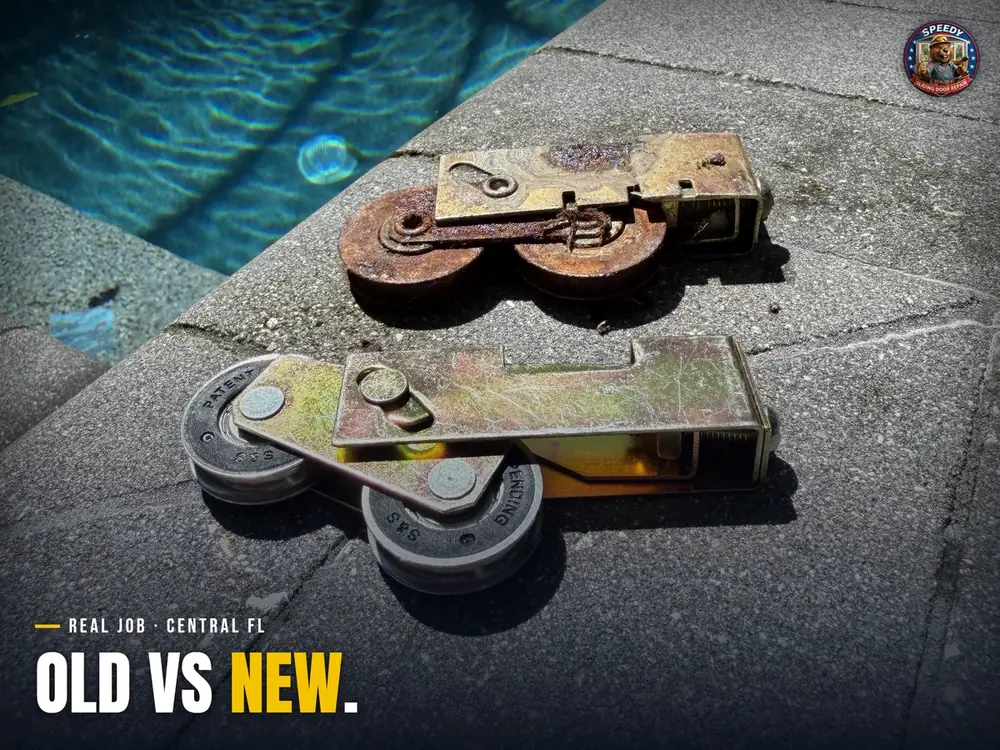
Hurricane wind doesn’t just push on the door — it pulses, creating vibration that loosens worn parts. A door with marginal rollers in March will be a door with off-the-track rollers in October. Signs you need pre-storm service:
- Door takes two hands to slide
- You can hear a grinding or scraping sound
- The door tilts slightly when stationary
- You see metal shavings in the track
Step 3: The weatherstrip is your unsung hurricane hero
The pile weatherstrip around the edges of the door does more than seal out air — in a hurricane it’s the difference between “water trickle” and “water gushing through your living room.” If the weatherstrip is dried out, brittle, or has visible gaps, replace it before the season. Includes full restoration (quoted after a free inspection).
Step 4: For impact-rated doors, verify the rating is intact
If you have PGT WinGuard, CGI Sentinel, or another impact-rated slider, the rating depends on the door being in factory-spec condition. Loose rollers, missing weatherstrip, or aftermarket parts that aren’t HVHZ-compliant can void the impact rating — and your insurance.
We work with parts that maintain HVHZ compliance. See PGT-specific repairs | CGI-specific repairs.
Impact door already hard to move, or won’t lock? See impact sliding glass door repair.
Step 5: For non-impact doors — the brutal truth
If you have a non-impact slider in Florida, you have three options for hurricane season:
- Plywood and screws (cheapest, ugliest). Cut to fit, label by door, store flat. About $80–$150 in materials.
- Removable hurricane panels. Aluminum or PVC panels that bolt to anchors around the door. About $30–$60/sqft installed.
- Impact-rated retrofit. Replace the door with PGT or CGI impact-rated. It costs thousands of dollars installed but qualifies for insurance discount and Florida tax credits.
The Speedy hurricane-prep tune-up
One service call before May to check rollers, track, lock, weatherstrip, and alignment. Anything that needs attention gets done in the same visit. The restoration package is quoted after a free inspection and covers everything.
Frequently asked
When should I do hurricane prep on my sliding door?
The best time to prep a sliding door for hurricane season is March or April, before specialists fill their calendars in May. By May the calendar fills and prices firm up. June 1st is too late for non-emergency work.
Will plywood actually protect my sliding door?
Yes — properly cut and screwed plywood (5/8 inch minimum) is far better than nothing. It’s ugly but effective.
Is impact glass worth the upgrade?
For most Florida coastal homes, yes — insurance discounts pay back the cost in 8–12 years, and you avoid the annual prep ritual. Inland and not in HVHZ — the math is closer.
Can you do emergency post-storm repairs?
Yes. Same-day or next-day for lock failures, broken tracks, off-track doors, weatherstrip damage.
Get My Free Estimate →📞 (321) 204-2545