
Sliding Glass Door Hard to Open
A sliding glass door is supposed to glide with one finger. When it gets heavy, stiff, or takes two hands and a shoulder to move, something underneath has gone wrong — and it almost always comes down to one of four things. The good news: two of them you can fix this afternoon with a vacuum and a can of spray. The other two need parts. Here’s how to tell them apart.
Why a sliding glass door gets hard to open
The whole door — often 80 to 150 pounds of glass and aluminum — rides on two small wheels called rollers tucked into the bottom edge. When those wheels spin freely on a clean track, the door feels weightless. When they stop spinning, you’re no longer rolling the door, you’re dragging it. That’s the heavy, gritty, fight-it feeling. Four things stop the wheels from spinning:
- Rollers worn flat — the #1 cause, and the most common on any door 8–12 years old in Florida
- A track packed with sand-and-pet-hair paste — the easiest fix
- Rollers sitting too low — a quick height adjustment, no parts needed
- Salt-air corrosion pitting the track — common near the coast, needs repair
Cause 1: Rollers worn flat (the heavy-door classic)
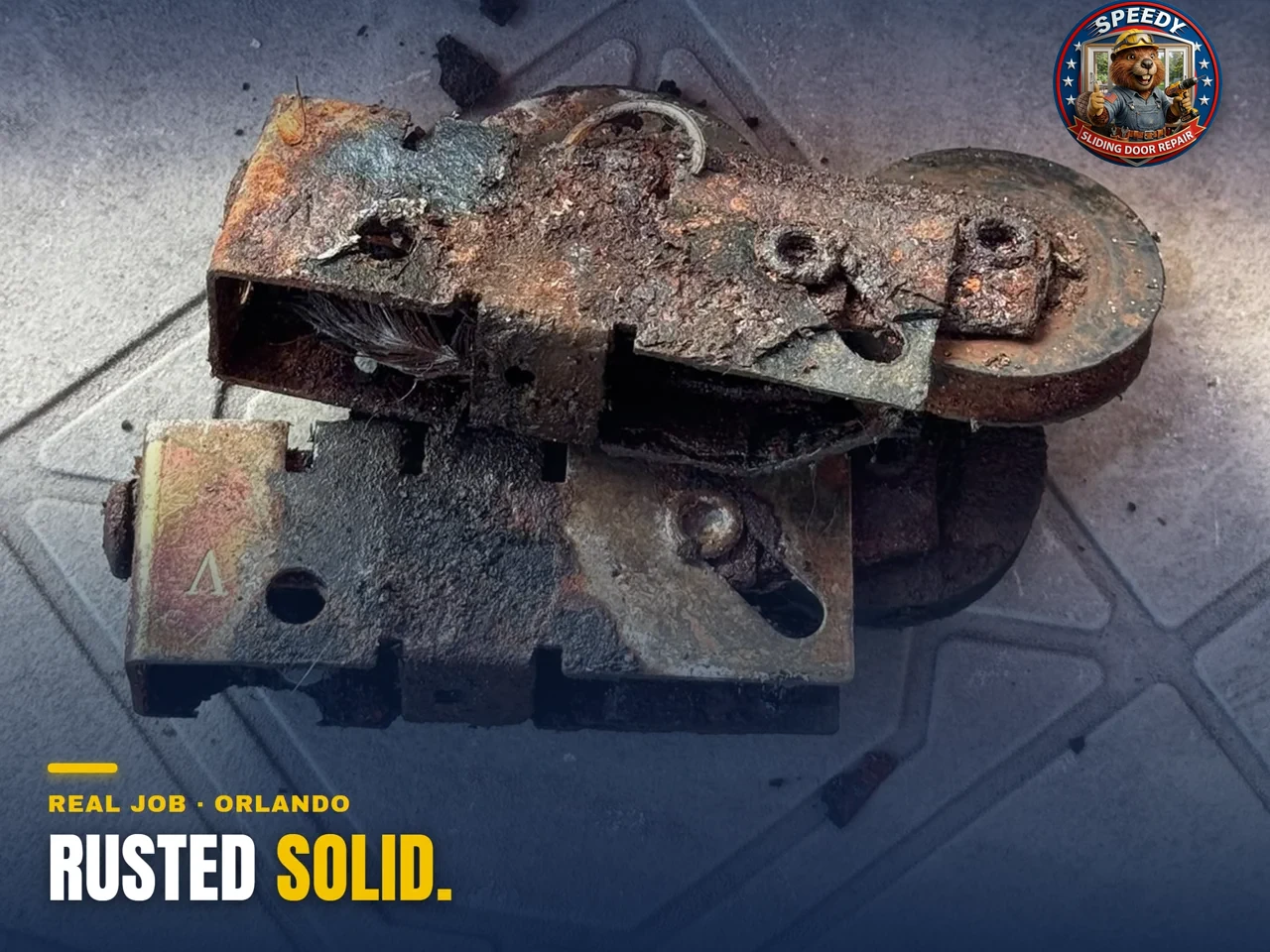
Rollers are nylon or steel wheels, and they don’t last forever. In Central Florida, the combination of heat, humidity, and daily use wears them out in 8 to 12 years — sooner on a busy pool-home door that opens 20 times a day. A flat-spotted wheel won’t roll; it skids. The door feels heaviest right at the start of the slide, and you’ll often hear a low grind or feel a thud-thud as the flat spots hit the track.
Want to confirm it? Open the door halfway and look at the bottom edge while a helper slides it. If the wheels aren’t turning, or the door has settled so the bottom rail is scraping the track, the rollers are done. No amount of cleaning brings a flat roller back — it’s a mechanical part that has reached the end of its life. That’s a Roller Replacement, from $89, and it’s usually a 30–45 minute job. We carry universal-fit rollers for Andersen, Pella, PGT, CGI and most other brands. Not sure which kind your door uses? Our guide to sliding door roller types breaks it down.
Cause 2: A track packed with Florida grit
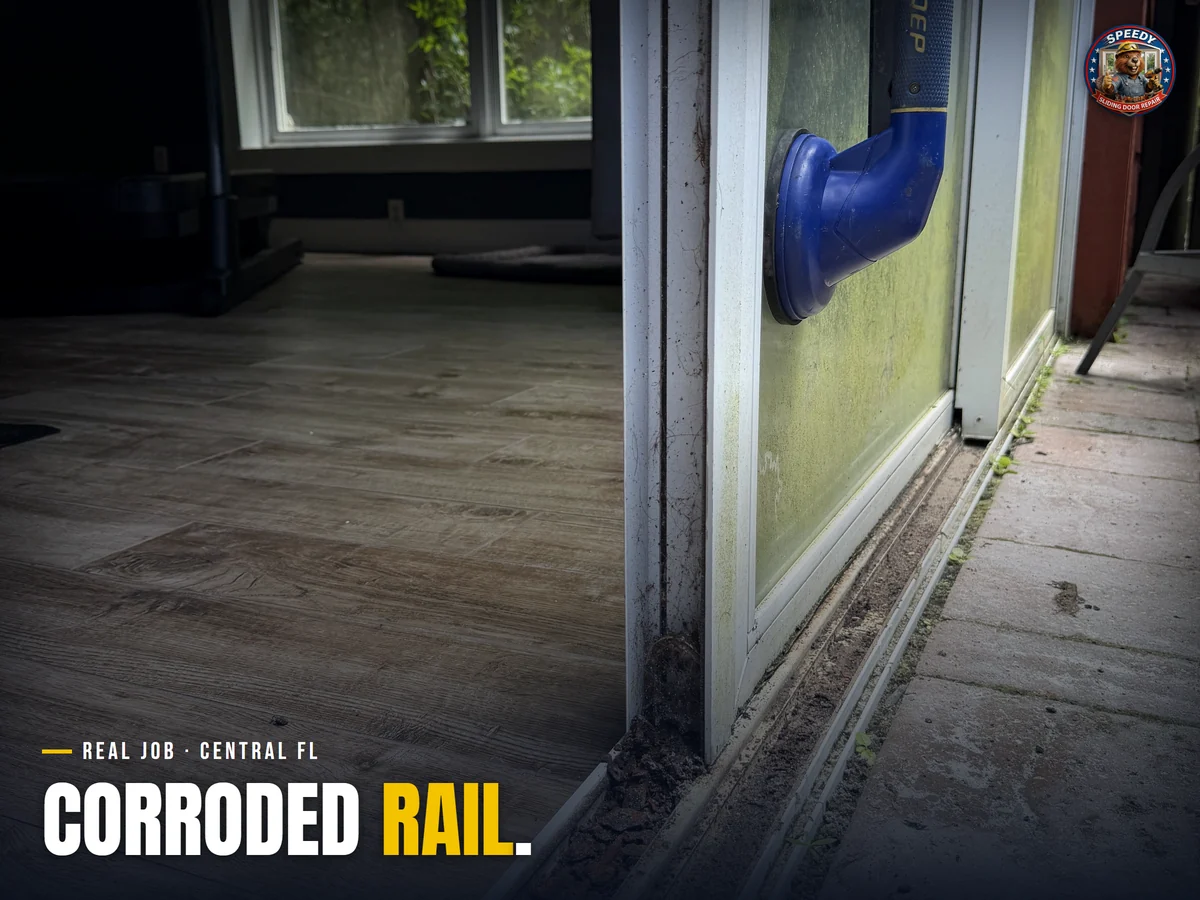
This is the one to rule out first because it’s free. Sand tracked in from the beach, pet hair, pollen, and palm debris collect in the bottom channel. Add humidity and it sets into a hard paste that the rollers have to climb over. The door feels stiff and a little crunchy. Fix it yourself: shop vac the track, damp-wipe the groove, then hit it with a dry silicone spray. Do not reach for WD-40 — it flushes out lubricant and attracts even more grit, so the door drags again within weeks. We explain the right product and method in how to lubricate a sliding door the right way.
Cause 3: Rollers set too low
Every sliding door has two adjustment screws hidden behind small plastic caps at the bottom corners of the moving panel. Turning them raises or lowers the rollers. Over time — or after someone “adjusted” it — the wheels can end up sitting too low, which buries them in the track and adds drag. If the wheels are still round, a small clockwise turn to lift the door can take the heaviness right off. Turn a quarter-turn at a time and test; over-raising makes the door rock. If the wheels are flat-spotted, adjusting won’t help — you’re back to Cause 1.
Cause 4: Salt-air corrosion pitting the track
If you’re anywhere near the coast — Daytona Beach, Port Orange, New Smyrna — salt air is brutal on aluminum tracks. It pits and roughens the metal surface the rollers ride on, turning a smooth runway into sandpaper. The door drags in the corroded section even after you clean it, and you can sometimes see a chalky white roughness on the track. Cleaning won’t fix pitting; the surface itself is damaged. We cap the track with marine-grade stainless or replace the section — that’s a Track Repair, from $99. Curious why coastal doors fail faster? It often shows up first as noise — see why is my sliding door grinding.
The 20-minute DIY pass, in order
Work these in sequence and stop the moment the door glides freely:
- Shop-vac both halves of the bottom track with a brush or crevice tool
- Wrap a damp microfiber around a flathead screwdriver, run it through the groove, then wipe dry
- Spray dry silicone on the track and the visible rollers — never WD-40
- Slide the door open and closed 8–10 times to spread the lube
- Still heavy? Pop the corner caps and lift each roller a quarter-turn, testing as you go
If cleaning, lube, and a height tweak all fail to lighten the door, you’ve diagnosed it yourself: the rollers are mechanically gone. No spray fixes a flat wheel. At that point, have Speedy diagnose it for free and replace the rollers in one visit.
What it costs to fix
Here’s the honest range. Cleaning and a roller adjustment are often free during the diagnosis — we’d rather fix it cheap than sell you parts you don’t need.
| What’s wrong | The fix | Starting price |
|---|---|---|
| Packed track / dirty groove | Clean & lube | Often free at diagnosis |
| Rollers set too low | Height adjustment | Often free at diagnosis |
| Rollers worn flat | Roller Replacement | $89 |
| Pitted or dented track | Track Repair & Installation | $129 |
| Heavy door + rollers + track + tune | Full Restoration | Free inspection |
Every part we install carries a 1-year warranty. For a fuller breakdown of what drives the number up or down, see our sliding door repair cost guide for Central Florida.
Why a heavy door is worth fixing now
A door that fights you isn’t just annoying. Dragging the panel grinds the track and chews the rollers faster, so a $89 roller job left alone can turn into a track repair too. It also means the lock often won’t seat cleanly, and a door that’s hard to slide is a door nobody fully closes — which lets Florida humidity and cooled air leak straight out. Fixing the glide early is the cheapest this problem ever gets.
Frequently asked
Why is my sliding glass door suddenly so hard to open?
Most often the rollers have worn flat. After 8–12 years in Florida heat and humidity the wheels under the door flatten out and stop spinning, so you’re dragging the full door weight across the track instead of rolling it. A packed track or a roller that has dropped too low can cause the same heaviness.
Will WD-40 fix a heavy sliding glass door?
No. WD-40 is a solvent — it flushes out lubricant, then evaporates, and it attracts sand and dust that make the door worse within weeks. Use a dry silicone spray on the track and rollers instead. If silicone doesn’t fix it, the rollers are mechanically gone and need replacing.
Can I adjust the rollers myself to make the door lighter?
Sometimes. There are two screws behind plastic caps at the bottom corners of the door; turning them raises or lowers the rollers. If the wheels are still round, lifting the door a touch can take the drag off. If they’re flat-spotted, no adjustment helps — you need new rollers.
How much does it cost to fix?
Cleaning and adjustment are often free at the diagnosis. Roller Replacement from $89, Track Repair from $99, Full Restoration priced after a free on-site inspection. All parts carry a 1-year warranty.
Get My Free Estimate →📞 (321) 204-2545