
Cracked, Foggy or Broken Sliding Glass Door? What to Check First
The glass is what you notice. The door is usually what failed. In our field data from 677 Central Florida homes, among the 127 whose records describe the problem, 77% had a roller or glide issue. Only 2% involved the glass or frame. So before you assume the glass is the problem, check the parts that move it.
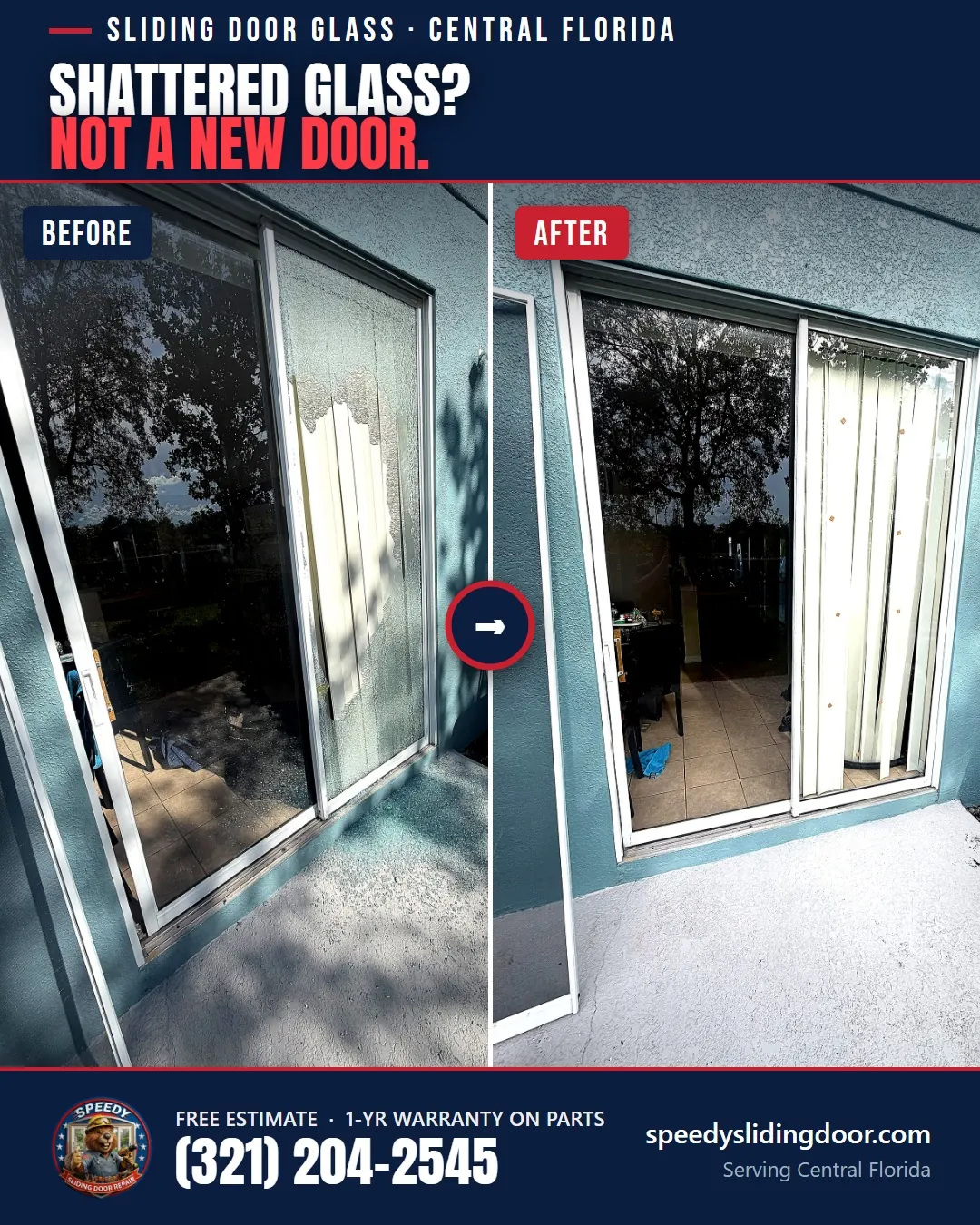
Check 1: Does the panel sag or drag?
Worn rollers let a heavy panel drop at one corner. It drags, binds, and gets forced open and shut. That twist lands on the glass corners every single day. If the bottom gap looks uneven or the door takes two hands to move, start here. Roller replacement levels the panel and takes the strain off the glass.
Check 2: Does it bang or jump the track?
A bent, dented or dirty track makes the panel hop, stall, then slam into the frame. Each hit is a small shock to the glass. Look along the bottom rail for flattened spots, corrosion, or debris packed into the channel. Track repair gives the rollers a straight, smooth path again.
Check 3: Do you have to slam it to lock it?
When the latch no longer lines up with the keeper, people push harder or slam the door to make it catch. That is hard on the glass, and it still leaves the door unsecured. Most of the time the panel has sagged out of line, or the lock itself is worn. Lock repair, often paired with new rollers, gets it catching with a light push.
Check 4: Is the fog between the panes, or on the surface?
This one matters, so here it is straight:
- Fog or water on the inside surface that you can wipe off is humidity, or air getting past worn seals and weatherstrip around the door. That is a door fix.
- Fog trapped between the two panes that never wipes off means the insulated glass unit’s edge seal has failed. Moisture is sealed inside the glass. That is a glass-unit issue, not a roller or track issue.
Our guide to a foggy sliding glass door walks through the difference in more detail. Either way, worn seals let in moisture and heat, and fixing them helps the whole door.
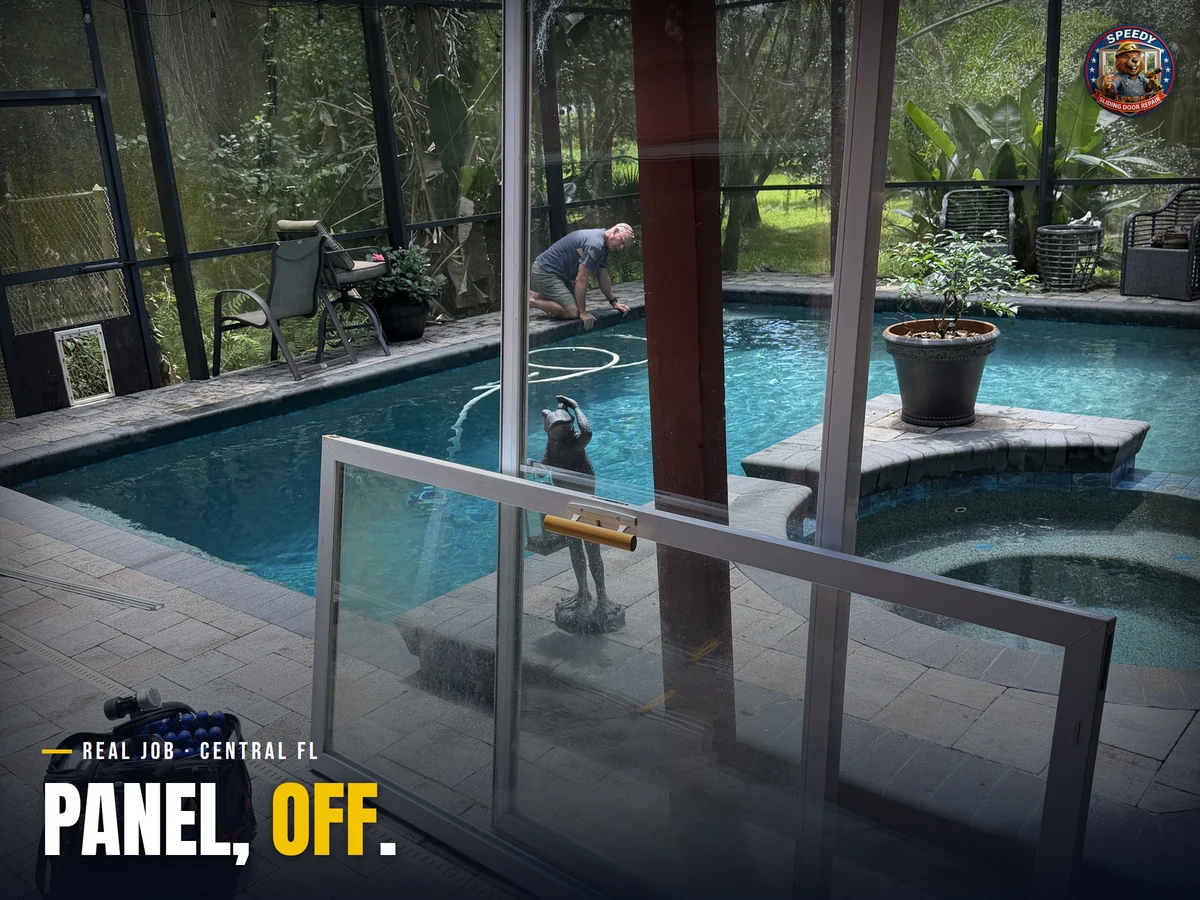
Check 5: Is there a crack?
A crack in a pane does not patch and does not heal. It is a glass-unit issue. But ask why it cracked. A panel that sags, binds or slams keeps stressing whatever glass is in it. If the rollers and track are worn, they need fixing either way, or the stress keeps coming.
What Speedy does on a “glass problem” call
- Free on-site inspection of the whole door. Rollers, track, latch, lock, seals and weatherstrip, plus a look at the glass.
- We fix what moves the door. Rollers, track and locks, priced at your free estimate. When several parts are worn, a full restoration is priced after the free inspection.
- We tell you straight about the glass. If the glass unit itself needs attention, you hear it from us honestly. No guessing and no pressure.
- 1-year warranty on parts on the work we do.
Fix it, don’t replace it. Most doors that look like a glass problem just need their hardware brought back.
Frequently asked
Is a foggy sliding glass door a glass problem or a door problem?
Fog trapped between the two panes is the glass unit: its edge seal has failed and moisture got inside, so it cannot be wiped away. Fog or water on the inside surface is different and usually comes from humidity or worn seals around the door. A free on-site inspection tells you which one you have.
Can worn rollers really crack sliding door glass?
They can add to it. Worn rollers let the panel sag and drag, so it binds, gets forced, and bangs into the frame. That puts stress on the glass corners day after day. New rollers and a straight track take that stress away.
What should I do if my sliding glass door shatters?
Keep people and pets away, do not pick up glass with bare hands, and do not slide the panel because loose pieces can fall. Speedy does not do board-up. Call (321) 204-2545 and we will inspect the door hardware and tell you honestly what the door needs.
How much does it cost to have Speedy check my door?
The on-site inspection is free. Rollers, track and locks are priced at the free inspection, and you approve the price before any work starts. Every repair comes with a 1-year warranty on parts.
Will Speedy tell me if the glass itself needs attention?
Yes. We inspect the whole door, fix the rollers, track, lock and seals, and if the glass unit itself is the issue, we tell you straight. No guessing and no pressure.
Get My Free Estimate →📞 (321) 204-2545
Related reading
- The Florida Homeowner’s Complete Sliding Door Guide — the master reference
- What actually breaks on sliding glass doors: the field data
- Foggy sliding glass door? What’s actually wrong
- Repair or replace: the math most homeowners get wrong
- Drafty sliding glass door? How to seal it up
- Speedy full restoration package